Give weight the right job
Weight is easy to record and useful for seeing a longer-term trend. It is also affected by normal day-to-day variation, so a single reading rarely tells the whole story.
Use comparable readings and look at the direction across time. Keep the number beside visual and wellbeing records rather than asking it to explain every part of progress.
Add the changes a scale cannot show
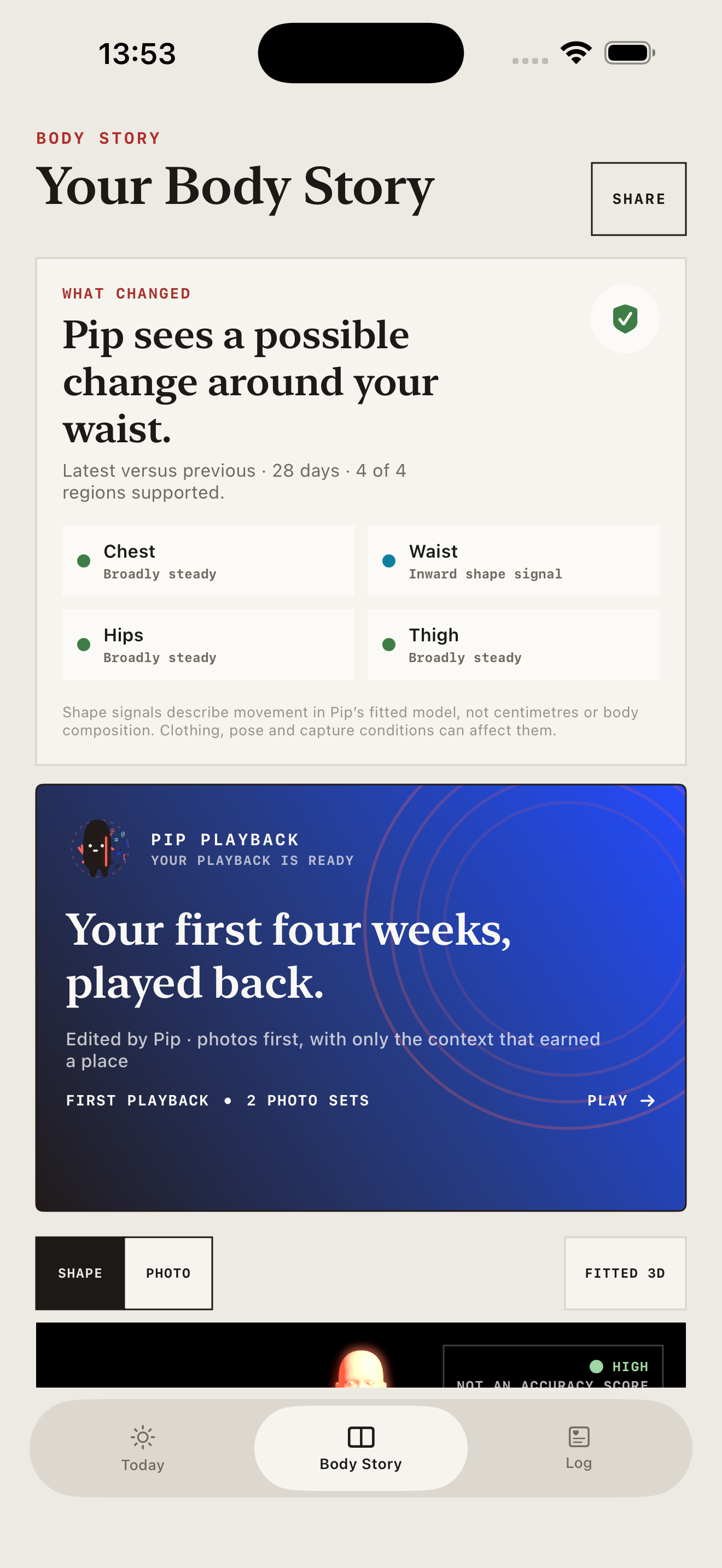
Matched body photos can show visible shape from several angles. A repeatable 3D body estimate can make it easier to inspect the same regions from the same viewpoint.
Appetite, comfort, energy and symptoms are different kinds of evidence. Record them in their own fields so they are not blurred into a single progress score.
Review the record before changing the plan
Use the timeline to see what was recorded and when. Do not treat an apparent pattern as proof that a medicine caused an outcome.
Questions about dose, side effects, suitability or treatment changes belong with your prescriber or another qualified healthcare professional.
Keep this check-in repeatable.
- Record weight consistently
- Create a visual baseline
- Use the same photo setup
- Track appetite and symptoms separately
- Review trends over time
Pip is a personal progress-record tool. It does not provide medical advice, diagnose conditions or recommend treatment. Speak to a qualified healthcare professional about medical concerns or changes to a treatment plan.