Define what you are following
‘Waist’ can refer to a tape position, a fitted-model region or the visible outline in photographs. Record which method produced each result.
For visual tracking, use front and side views. A side profile can reveal shape information that is hard to see from the front alone.
Repeat the conditions
Use similar clothing, posture, camera position and time of day. Avoid comparing one relaxed photograph with another taken while twisting, flexing or holding the stomach in.
If using a tape, follow the same instructions and position each time. Do not infer centimetres from an uncalibrated photograph.
Look for a supported direction
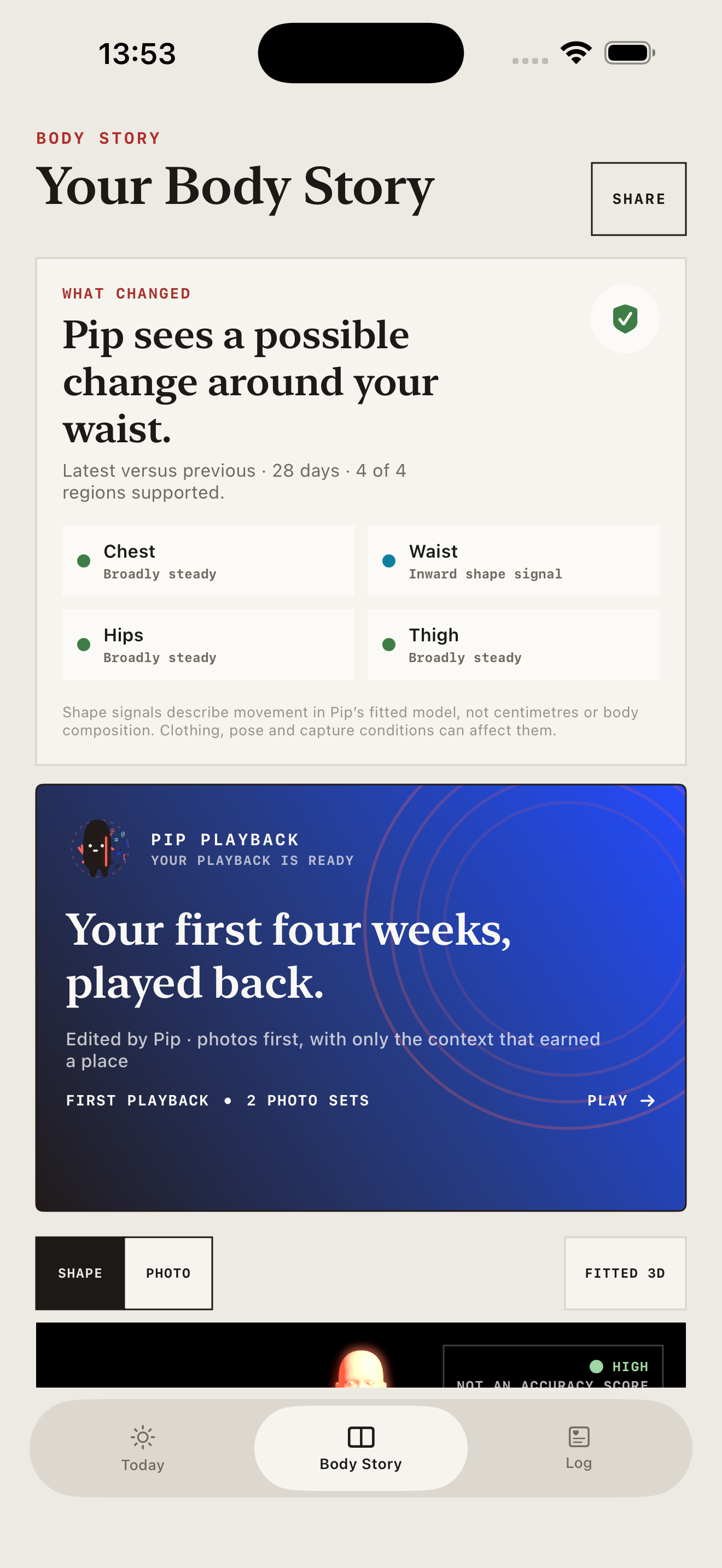
A fitted-body comparison may describe the waist as moving inward, outward or remaining broadly steady when the source evidence is compatible.
Treat that description as a directional shape signal, not proof of fat loss, muscle change or a medical outcome.
Keep this check-in repeatable.
- Choose and label the method
- Use front and side evidence
- Match posture and clothing
- Repeat the same setup
- Describe direction cautiously
Pip is a personal progress-record tool. It does not provide medical advice, diagnose conditions or recommend treatment. Speak to a qualified healthcare professional about medical concerns or changes to a treatment plan.