Check the setup before the body
Start by comparing framing, camera height, distance, lighting, clothing and posture. If those changed substantially, note that the visual comparison is weaker.
A dramatic difference in one view that disappears in the other three may come from capture conditions rather than a consistent shape change.
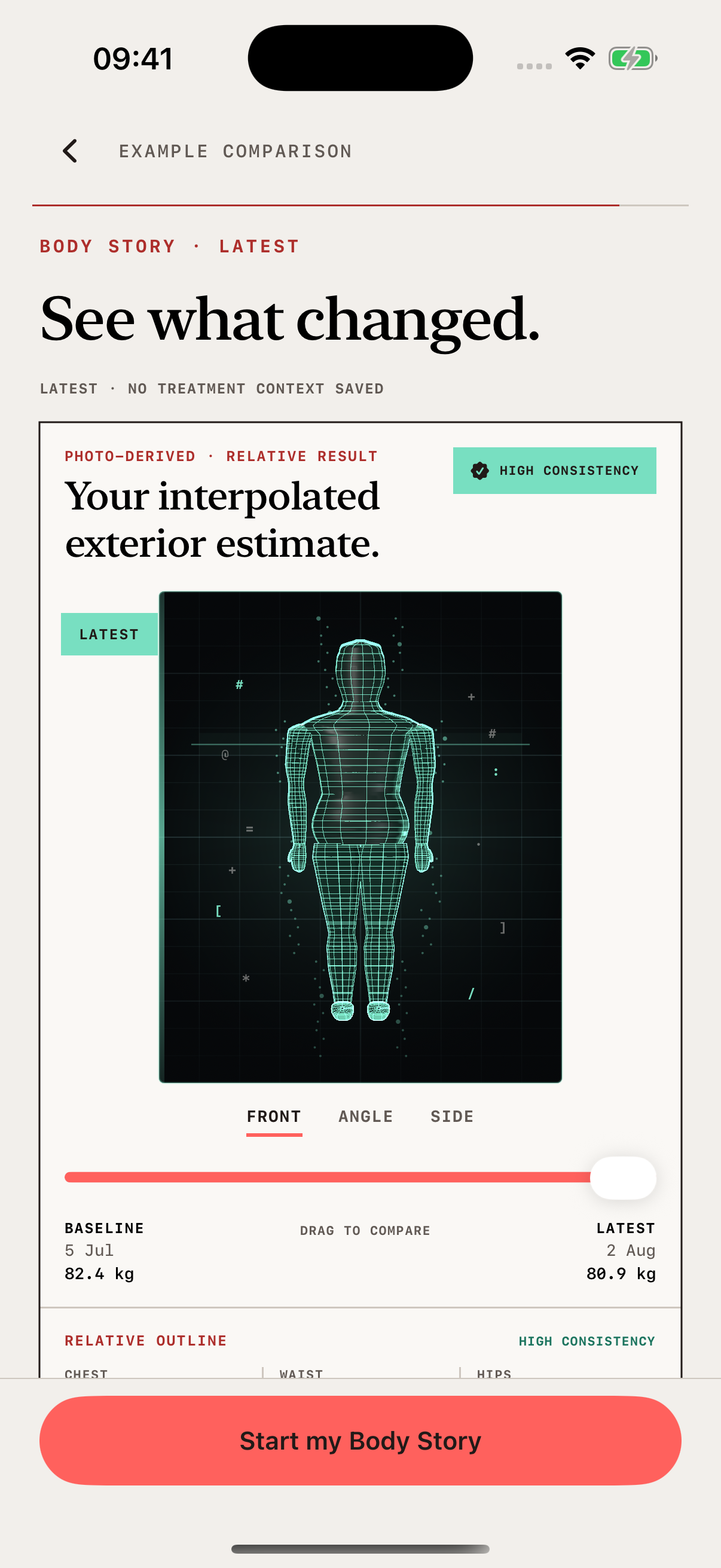
Use a defined baseline and latest
Choose which two dates you are comparing and keep the labels visible. Avoid swapping between several almost-identical images without a clear starting point.
If possible, preserve intermediate chapters. They can show whether a direction appears consistently or whether two endpoints are unusually different.
Describe before interpreting
Begin with neutral language: the outline appears inward, outward or broadly steady in a defined region. Avoid jumping from a visual observation to a medical explanation.
Use the observation as part of a wider record that may include weight, fitted shape and wellbeing entries.
Keep this check-in repeatable.
- Match the same view
- Check capture conditions
- Use clear dates
- Inspect all available angles
- Describe the visible direction
- Keep uncertainty visible
Pip is a personal progress-record tool. It does not provide medical advice, diagnose conditions or recommend treatment. Speak to a qualified healthcare professional about medical concerns or changes to a treatment plan.