Each view contributes different shape evidence
The front and back views help describe width and outline across multiple regions. The two side views add information about depth and profile that cannot be recovered reliably from the front alone.
Using all four views does not remove uncertainty, but it provides a broader exterior record than a single photograph.
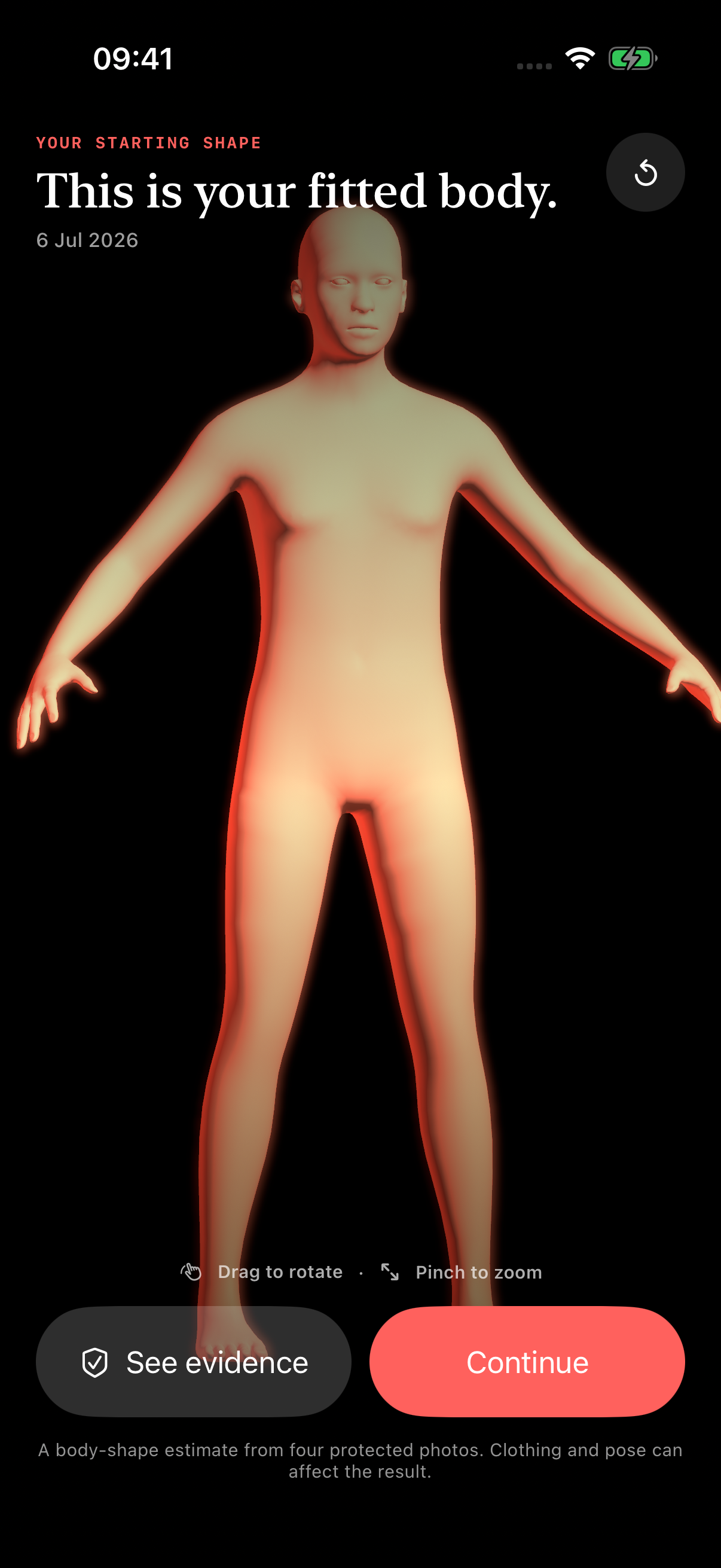
The evidence is fitted to a 3D body
Visual analysis identifies exterior outline and proportion evidence across the prepared views. Personalised anatomical fitting uses that evidence to construct a rotatable body-shape estimate.
The fitted surface should remain connected to its source views so the person can see what supported it and where the evidence was weaker.
Know what can affect the result
Loose clothing, a changed pose, hair covering the outline, camera distortion and inconsistent framing can all affect a photo-based estimate.
Use it for personal progress comparison, not as a substitute for a clinical scan, tape measurement, diagnosis or treatment decision.
Keep this check-in repeatable.
- Use all four views
- Keep the full body visible
- Match clothing and pose
- Inspect the source evidence
- Treat the model as an estimate
Pip is a personal progress-record tool. It does not provide medical advice, diagnose conditions or recommend treatment. Speak to a qualified healthcare professional about medical concerns or changes to a treatment plan.